
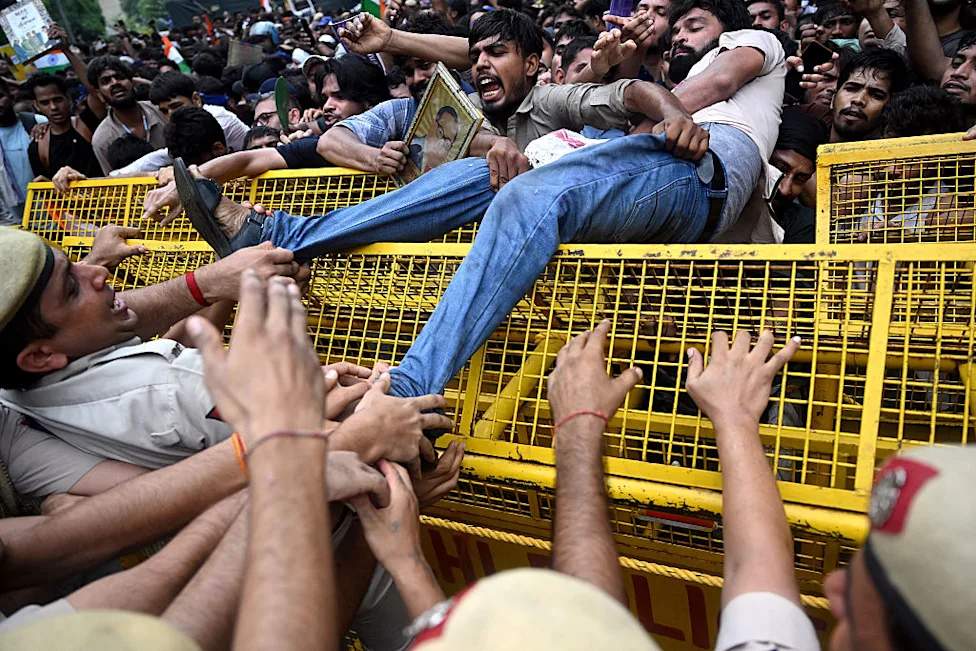
India's youth-led "cockroach movement" was born just over two months ago as a satirical online campaign. It quickly swelled into a formidable political force, bringing tens of thousands of protesters into the streets of New Delhi to call for the resignation of Education Minister Dharmendra Pradhan and reforms to the national education system.
// RELATED STORIES

Suka dengan artikel ini?
Dapatkan lebih banyak informasi teknologi menarik dengan berlangganan newsletter kami. Gratis!
Subscribe Sekarang →Thousands of supporters of the Cockroach Janta Party (CJP) continued their demonstrations in the capital on Wednesday. The ongoing sit-in follows violent clashes earlier in the week, where law enforcement used batons and tear gas to disperse activists marching on Parliament, leaving dozens injured.
The movement's Monday gathering marked one of India's largest anti-government protests in years, drawing an estimated 20,000 young people and students. According to police reports, around 180 people were injured during the clashes, including 118 security personnel. Abhijeet Dipke, the founder of the movement, stated that 150 protesters required hospital treatment.
The spark for the uprising came after Indian authorities voided the May 3 NEET medical entrance exam due to widespread question leaks. Over two million students were forced to retake the test. The movement also drew momentum from remarks made by the Chief Justice of India, who had compared unemployed youth to "cockroaches" and "parasites." In response, Dipke launched the CJP, quickly amassing over 20 million social media followers.
Political opposition leaders have since rallied behind the youth movement. Rahul Gandhi, leader of the Indian National Congress (INC), was briefly detained after leading a sit-in outside Prime Minister Narendra Modi's residence. Opposition lawmakers subsequently halted parliamentary proceedings, demanding answers from the government regarding exam irregularities and police conduct.