
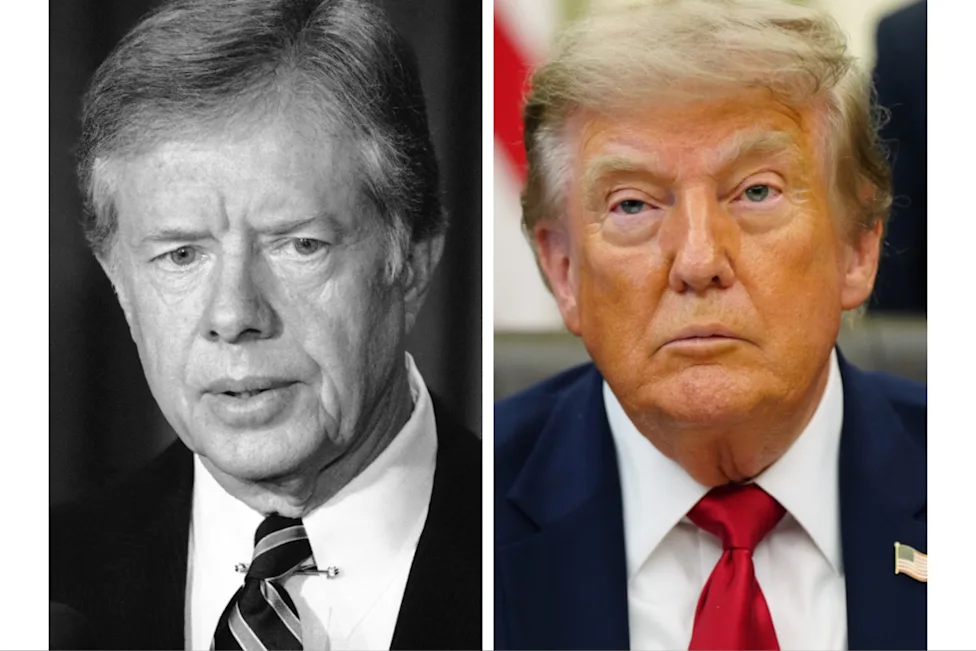
WASHINGTON — The late Jimmy Carter was once a favorite target for Donald Trump. He was the standard foil, the weak Democrat used to make Trump look strong. Now, the tone has grown quiet. The current president faces the old ghosts of the thirty-ninth president.
// RELATED STORIES

Suka dengan artikel ini?
Dapatkan lebih banyak informasi teknologi menarik dengan berlangganan newsletter kami. Gratis!
Subscribe Sekarang →A hard war in Iran grinds on with no end in sight. The United States moves to control the Strait of Hormuz, and the conflict rises. At home, inflation is a heavy burden on the people. Trump promised his business background would cure the economy, but the high prices remain.
The history weighs on him. When asked why he did not send Special Forces into Iran to seize enriched uranium, Trump was direct. "I didn't feel like being Jimmy Carter," he said. He remembered the year 1980, when a failed rescue mission killed eight American soldiers and broke Carter's chances against Ronald Reagan.
According to Jonathan Alter, the biographer who wrote of Carter's life, the reality is breaking through. Alter noted that it is dawning on Trump that he has kicked a hornet's nest. His presidency may now be remembered for the same dark troubles that defined the Carter years.
The White House answers with firm words. Presidential spokesperson Olivia Wales stated that Trump will never allow Iran to possess a nuclear weapon. She said the president remains focused on his economic agenda to lower costs and cares only about making America greater than ever before.
The two men came from different worlds. Carter stayed with his wife Rosalynn for seventy-seven years, held deep faith, and swore never to lie. Trump has known divorce, uses hard language publicly, and speaks with constant falsehoods. Carter put his peanut farm in a blind trust; Trump's sons run his empire, which took in nearly 1.2 billion dollars from cryptocurrency last year.
The economic pain belongs to both eras, though Carter's burden was heavier. Inflation hit nearly fifteen percent in the spring of 1980. This May, consumer prices rose over four percent. A brief summer drop in prices came from a ceasefire, but that truce is gone and oil prices are climbing again.
Based on reports of the conflict, Trump and Israel began this war in February. The American attacks have grown sharper since Iran began striking commercial ships in the strait. Carter faced the same water, declaring in 1980 that the crisis demanded the help of every nation relying on Middle Eastern oil.
There are other echoes. Carter considered taking Kharg Island but chose peace to save the American hostages. Trump struck the island early in this war to stop Iranian oil exports, and he has threatened to strike it again. The difference is simple; Carter wished to avoid war, while America is already in it.
The president now studies the past, praising the tariffs of William McKinley and the strength of Teddy Roosevelt. He stated he sought the June ceasefire to avoid the financial ruin that destroyed Herbert Hoover. "I'm a student of a lot of history," Trump said.
According to James P. Pfiffner, a professor emeritus at George Mason University, the attack on Iran may hurt the president's legacy deeply rather than help it. Pfiffner noted that if the president had learned from history and listened to the warnings about the Strait of Hormuz, he would have hesitated. Instead, he ignored the old lessons of geography.