
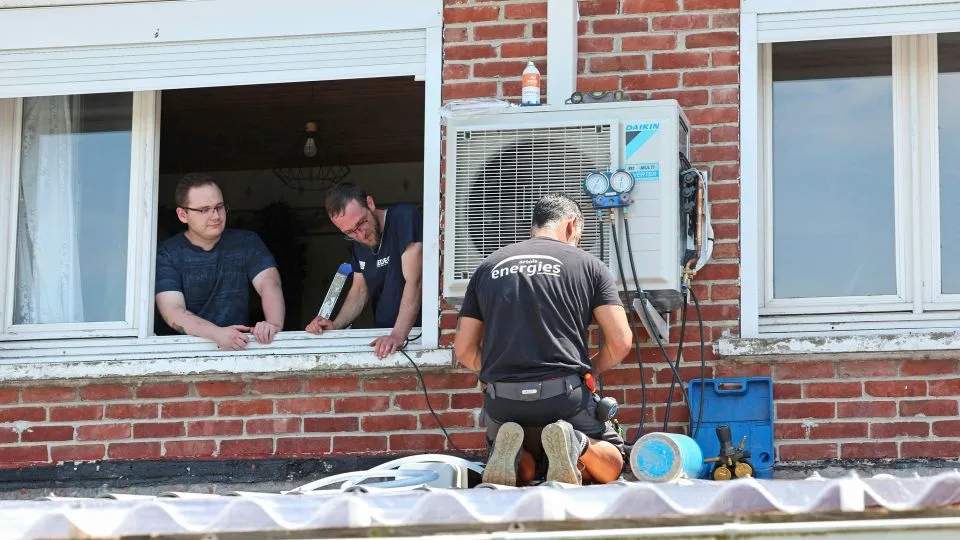
A punishing heatwave returned to France this week, bringing back the question that has troubled the nation all summer. The country has long resisted the cooling machines that are common elsewhere. Now, as the thermometer rises, that resistance is turning into a struggle.
// RELATED STORIES

Suka dengan artikel ini?
Dapatkan lebih banyak informasi teknologi menarik dengan berlangganan newsletter kami. Gratis!
Subscribe Sekarang →In Aubervilliers, near Paris, crowds fought outside Lidl stores to buy portable cooling units. The doors gave way and people were trampled in the rush. Based on data from France's energy transition agency, only 24% of French households own air conditioners. That number is growing, but it remains far behind the rest of Europe.
According to health authorities, more than 2,000 excess deaths occurred during six days of severe heat last month. Thousands of schools closed their doors because the classrooms became unbearable. Just 7% of French schools possess cooling equipment, forcing the state to confront a changing climate.
The French have long viewed air conditioning as ugly, noisy, and distinctly American. For generations, builders relied on thick stone walls and heavy shutters to keep out the sun. There remains a widespread belief that artificial air brings sickness, but the old architecture is failing against the new heat.
Bureaucracy also stands in the way of those seeking relief. In Paris, strict heritage rules protect the nineteenth-century buildings designed under Georges-Eugène Haussmann. Authorities routinely deny residents permission to place external cooling units on historic facades to preserve the uniform appearance of the city.
The debate has now entered the political arena ahead of the 2027 presidential race. Marine Le Pen's National Rally has called for a massive plan to equip schools and hospitals with cooling units. The far-right party has proposed billions in government-guaranteed loans to help millions of households buy air conditioners.
The political left remains divided over the issue. Marine Tondelier, leader of the Greens, acknowledged that some cooling has become necessary for the vulnerable. Meanwhile, Jean-Luc Mélenchon of France Unbowed warned that widespread cooling would only cause greater harm to the environment.
Activists argue that the machinery consumes too much power and warms the city streets with waste heat. However, France relies on nuclear power for nearly two-thirds of its electricity, meaning the carbon cost is low. For many citizens, the argument is no longer about philosophy, but about surviving the summer.