
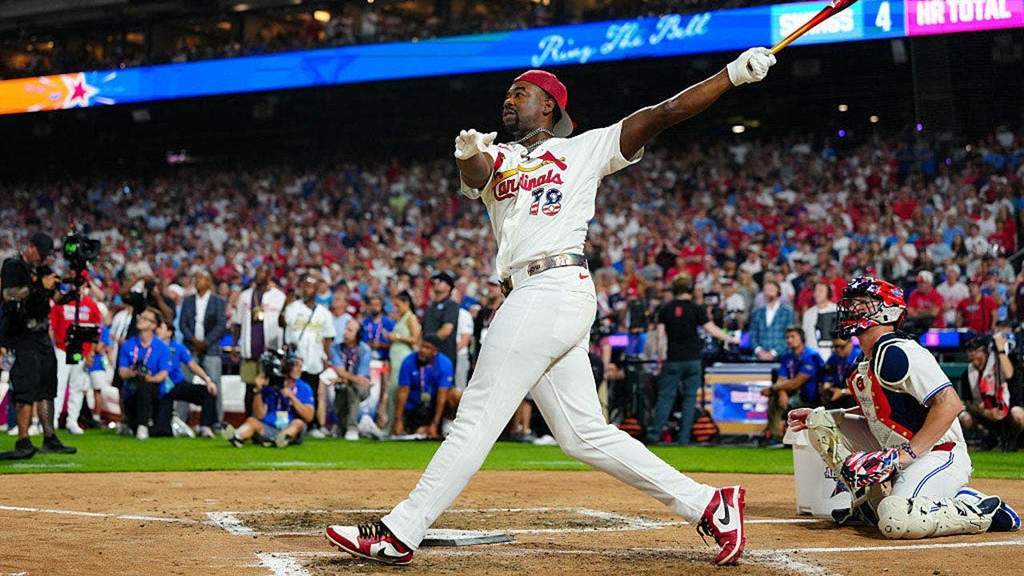
The Home Run Derby drew just 5.3 million viewers on Netflix on Monday, marking the event's lowest audience since 2003. St. Louis Cardinals star Jordan Walker beat hometown hero Kyle Schwarber to win the competition and secure a substantial check. The slumpish rating stands out as an anomaly, given that most live sporting events have posted notable year-over-year viewership gains in recent years across the United States.
// RELATED STORIES

Suka dengan artikel ini?
Dapatkan lebih banyak informasi teknologi menarik dengan berlangganan newsletter kami. Gratis!
Subscribe Sekarang →According to industry analysts, the decline likely has more to do with the platform than the baseball itself. Despite changing viewing habits, live sports continue to perform better on traditional television than on streaming networks. The drop is not entirely alarming, however, as the event averaged 5.73 million viewers on ESPN in 2025 and 5.45 million in 2024, indicating Netflix's broadcast was not far off the recent baseline.
The hope for major sports leagues remains that the gap between streaming and linear television will continue to narrow. Right now, the strongest industry model appears to be simulcasting games across both television and streaming. Meanwhile, Netflix's foray into live sports has drawn widespread criticism for feeling more like an infomercial for the company's entertainment slate than a straightforward sports broadcast.
The streamer continues to feature celebrities and influencers prominently during its coverage, including Will Ferrell throughout the derby. Longtime sports radio host Dan Patrick criticized the approach, stating that sometimes you can try too hard to dress something up when you really do not need to. Furthermore, Netflix has faced scrutiny for making former ESPN host Elle Duncan the face of its sports division, a decision that has alienated segments of the public.
Based on reports from OutKick, Netflix has work to do before it becomes a serious player in live sports. The current programming decisions are doing little to increase either consumer interest or viewership. The streaming giant must refine its production quality if it hopes to compete with traditional television networks in the future.