
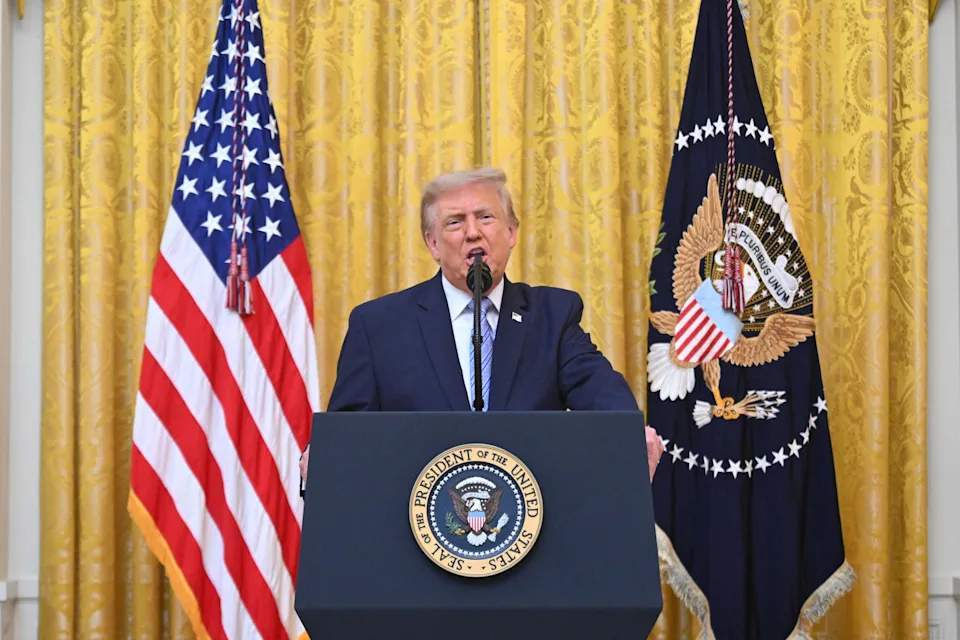
President Donald Trump took to the airwaves on July 16 to deliver a primetime speech aimed at casting doubt upon the security of American elections. The president spoke from the White House, claiming broad vulnerabilities in voting infrastructure and alleging that foreign powers stand ready to interfere. He pointed directly at China, asserting that Beijing compromised the 2020 election by stealing voter data. The speech laid bare his enduring grievances over past contests while setting a contentious tone for the upcoming midterm elections.
// RELATED STORIES

Suka dengan artikel ini?
Dapatkan lebih banyak informasi teknologi menarik dengan berlangganan newsletter kami. Gratis!
Subscribe Sekarang →"Every American deserves to know that when they cast their vote, that vote will be counted accurately," Trump said during the 25-minute address. He stated that the current system falls short of that standard, describing it as catastrophically vulnerable. The president claimed newly declassified documents would expose Chinese efforts to undermine the electoral process. However, the files released by the White House showed that much of the data in question consisted of publicly available records rather than stolen government secrets.
The address contradicted previous findings from the intelligence community. According to a March 2021 report released by Director of National Intelligence Avril Haines, the government possessed high confidence that China did not deploy attempts to alter the 2020 election outcome. While a minority view within the intelligence apparatus suggested social media campaigns took place, the consensus remained that China chose not to risk detection. Trump, however, claimed a hidden faction within his own administration had concealed the threat.
With the midterm contests only four months away, Trump urged lawmakers to pass the Safeguard American Voter Eligibility Act, or the SAVE America Act. The proposed legislation would require proof of citizenship to register to vote. House Speaker Mike Johnson has attempted to advance the bill through budgetary measures, though its path through the Senate remains uncertain. Trump warned that failure to pass the bill would doom future Republican electoral prospects, linking the legislative battle directly to the survival of the party's congressional majorities.
The opposition reacted with swift condemnation. Based on social media statements, Democratic leaders denounced the address as an attempt to undermine public trust. Former Vice President Kamala Harris declared that the 2020 election was safe and secure, while Senate Minority Leader Chuck Schumer called the speech a collection of blatant lies designed to obscure a poor legislative record. California Governor Gavin Newsom offered a particularly sharp critique, describing the performance as the erratic ramblings of a leader detached from reality.
The event also deepened the president's ongoing feud with the press. Network executives at ABC and NBC opted against broadcasting the address live on their main channels, choosing instead to air the speech on streaming platforms. The decision angered Trump, who used a portion of his remarks to demand the Federal Communications Commission revoke their broadcasting licenses. He accused the networks of participating in a broader media plot to deceive the public, reinforcing his long-standing hostility toward major press outlets.