
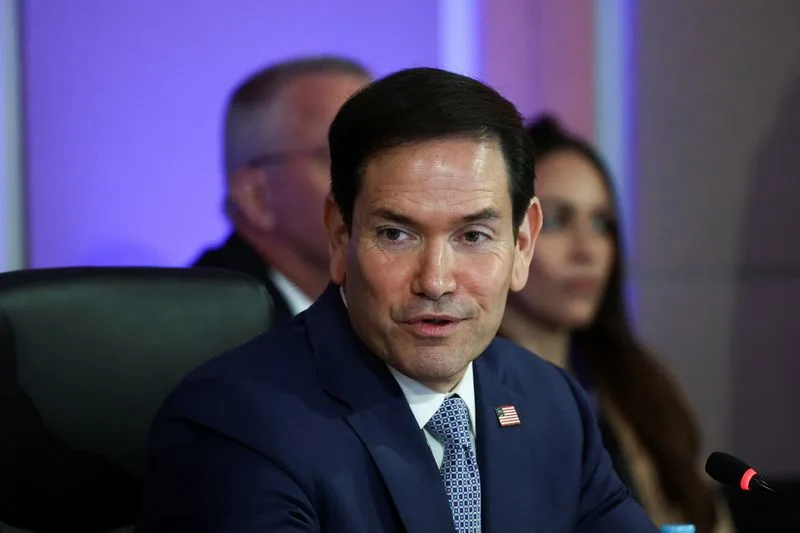
WASHINGTON — U.S. Secretary of State Marco Rubio has asked American diplomats across the globe to push back against growing international fears of a "kill switch" embedded in American technology products. The directive comes in the wake of the White House's brief decision to bar foreign nationals from accessing the country's most advanced artificial intelligence models, according to a diplomatic cable reviewed by Reuters. The talking points, circulated worldwide, illustrate how U.S. officials are attempting to manage the geopolitical fallout from the Trump administration's aggressive efforts to control the global distribution of cutting-edge AI software.
// RELATED STORIES

Suka dengan artikel ini?
Dapatkan lebih banyak informasi teknologi menarik dengan berlangganan newsletter kami. Gratis!
Subscribe Sekarang →The diplomatic messaging follows an executive action on June 12 that blocked foreign access to Anthropic's flagship AI models, Mythos and Fable, citing national security concerns. The sudden restriction forced the American AI firm to abruptly suspend model access globally, prompting foreign tech executives and lawmakers in Asia and Europe to redouble calls for digital independence. Although Washington lifted the ban later that month, the move combined with a June 2 executive order requiring AI firms to submit new models to 30 days of voluntary cybersecurity testing signaled a fresh willingness by the U.S. government to regulate and potentially withdraw crucial software from foreign partners.
European lawmakers voiced sharp criticism over the incident, arguing that Washington's actions revealed an underlying leverage over foreign technical infrastructure. "The U.S. holds a real kill-switch over essential technologies and they are more than willing to use it," said European lawmaker Christophe Grudler. Aura Salla, a member of the European People's Party in the European Parliament, echoed those concerns, stating that the continent "cannot keep building its tech stack on access that can be switched off overnight by a foreign government."
In response to the growing backlash, the State Department issued a cable on July 16 aimed at providing American diplomats with counterarguments to reassure international partners. "Pausing narrow uses or requiring a 30-day testing window prior to the release of a highly potent new technology is not a Kill Switch," the cable stated. According to the document, "There is no government magic button. This narrative is exaggerated and doesn't capture the nuances of U.S. technology policy."
Furthermore, Rubio instructed diplomats to actively counter so-called "digital sovereignty" initiatives, which Washington views as protectionist measures designed to restrict American tech firms through data localization laws, network usage fees, and strict local content moderation rules. The diplomatic cable urged officials to pitch American AI as the most secure option available, arguing that building foreign rival systems from scratch represents an inefficient use of resources. "American AI companies can build large, independent AI infrastructure, with secure and robust supply chains that minimize backdoor risk," the cable declared. "They build it. It's yours."
Despite the State Department's promotional campaign, policy analysts suggest that foreign partners remain skeptical of Washington's long-term reliability. Edward Fishman, director of the Maurice R. Greenberg Center for Geoeconomics at the Council on Foreign Relations, noted that European allies fear becoming over-reliant on U.S. frontier AI models that could eventually be weaponized economically. Reflecting the trust deficit, Salla noted that recent aggressive trade policies from Washington have fostered an atmosphere of skepticism, remarking, "They have not shown us any indication that they are reliable partners."