Evaluating the Financial Utility of the USD1 Stablecoin
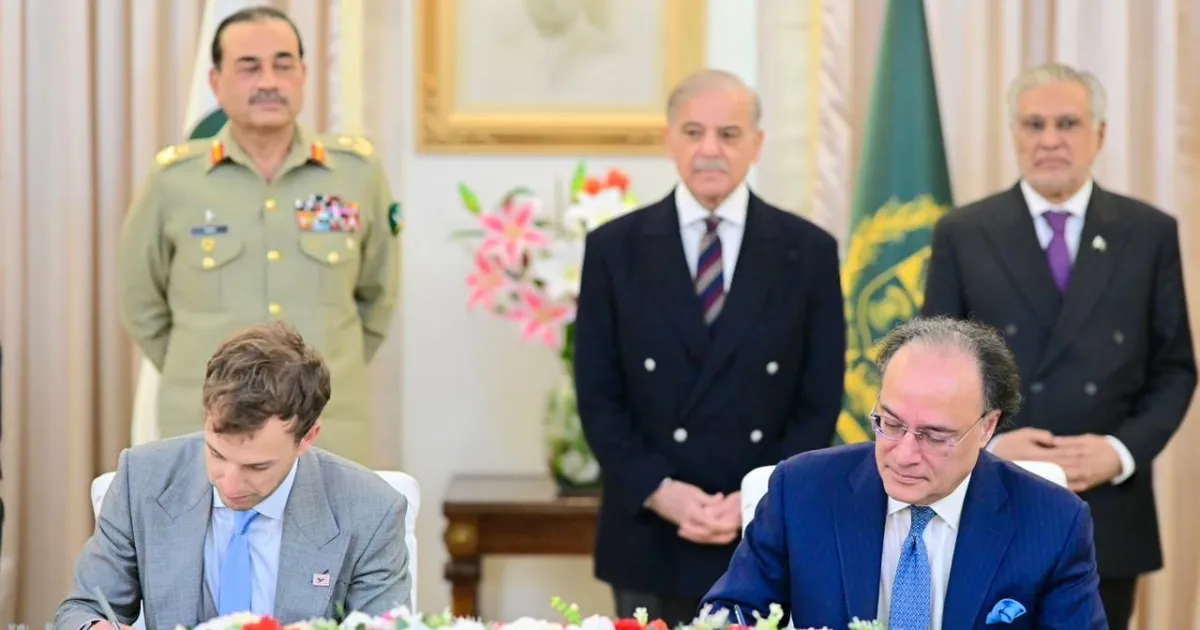
When US President Donald Trump's 2025 financial disclosures revealed that his family's crypto venture, World Liberty Financial (WLF), netted over $500m from token sales, Pakistan emerged as a key early partner. In January, Islamabad signed a memorandum of understanding with WLF affiliate SC Financial Technologies to explore using its dollar-pegged USD1 stablecoin for cross-border transactions. Despite high-profile ceremonies attended by Prime Minister Shehbaz Sharif and army chief Field Marshal Asim Munir, officials confirm that six months later, no pilot projects or transactions have actually materialized.
The lack of technical implementation highlights a sharp contrast with Pakistan's massive, existing crypto market. According to the Chainalysis crypto adoption index, the South Asian nation ranked third globally last year, driven heavily by informal transactions using Tether's USDT. While formal remittances reached a record $38.3bn in the last financial year—a 27 percent year-on-year increase—analysts question the economic necessity of adding the USD1 token. Financial experts note that the Central Bank's $16.5bn reserve capacity would still require converting tokens back into fiat currency, adding operational friction.
Read Also
Financial professionals remain skeptical about whether the digital currency solves any structural remittance challenges. "Whatever the reason, people using stablecoins are avoiding the banking channel," stated finance expert Ibrahim Khalil. "USD1 will not solve that issue if banking channels are involved." Furthermore, a senior Pakistani banking executive, speaking on condition of anonymity, emphasized that the current framework is strictly exploratory, noting that 'the architecture matters more than the counterparty' and that any deployment would realistically take months.
Despite the economic ambiguities, the diplomatic dividends for Islamabad have been undeniable. The deal coincided with a series of major geopolitical maneuvers, including Pakistan nominating Trump for the Nobel Peace Prize and Munir's historic lunch at the White House. Former WLF adviser and current government official Bilal Bin Saqib previously noted that the crypto push successfully rebuilt trust with Washington. Local commentators conclude that the arrangement was primarily an instrument for geopolitical access, which paid off spectacularly as Pakistan later positioned itself as a mediator in regional conflicts.